


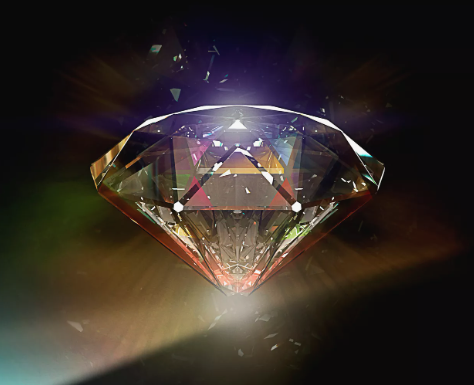
Luster, also spelled lustre, is a simple word for a complex thing: the way light interacts with the surface of a mineral. This gallery shows the major types of luster, which range from metallic to dull.
I might call luster the combination of reflectance (shininess) and transparency. According to those parameters, here is how the common lusters would come out, allowing some variation:
Metallic: very high reflectance, opaque
Submetallic: medium reflectance, opaque
Adamantine: very high reflectance, transparent
Glassy: high reflectance, transparent or translucent
Resinous: medium reflectance, translucent
Waxy: medium reflectance, translucent or opaque
Pearly: low reflectance, translucent or opaque
Dull: no reflectance, opaque
Other common descriptors include greasy, silky, vitreous and earthy.
There are no set boundaries between each of these lusters, and different sources may classify luster in different ways. Additionally, a single category of mineral may have specimens within it with different lusters. Luster is qualitative rather than quantitative.
Metallic Luster in Galena
:max_bytes(150000):strip_icc():format(webp)/GettyImages-157307689-5b748218c9e77c0050cc4fcf.jpg)
Galena has the real metallic luster, with every fresh face like a mirror.
Metallic Luster in Gold
:max_bytes(150000):strip_icc():format(webp)/GettyImages-667733149-5b7482b546e0fb00503b8fff.jpg)
Gold has a metallic luster, shiny on a clean face and dull on a worn face like this nugget.
Metallic Luster in Magnetite
:max_bytes(150000):strip_icc():format(webp)/GettyImages-565937539-5b748319c9e77c0057e2c7b3.jpg)
Magnetite has a metallic luster, shiny on a clean face and dull on a weathered face.
Metallic Luster in Chalcopyrite
:max_bytes(150000):strip_icc():format(webp)/GettyImages-989249614-5b7483aec9e77c00252d56c0.jpg)
Chalcopyrite has a metallic luster although it is a metal sulfide rather than a metal.
Metallic Luster in Pyrite
:max_bytes(150000):strip_icc():format(webp)/GettyImages-157305903-5b748424c9e77c0050fc547d.jpg)
Pyrite has a metallic or submetallic luster although it is an iron sulfide rather than a metal.
Submetallic Luster in Hematite
:max_bytes(150000):strip_icc():format(webp)/GettyImages-535685369-5b748480c9e77c00252d77d0.jpg)
Hematite has a submetallic luster in this specimen, although it can also be dull.
Adamantine Luster in Diamond
:max_bytes(150000):strip_icc():format(webp)/GettyImages-163488566-5b74871cc9e77c00252de5ab.jpg)
Diamond shows the definitive adamantine luster (extremely shiny, even fiery), but only on a clean crystal face or fracture surface. This specimen has a luster better described as greasy.
Adamantine Luster in Ruby
:max_bytes(150000):strip_icc():format(webp)/GettyImages-185003210-5b74878f46e0fb005043b31b.jpg)
Ruby and other varieties of corundum can display an adamantine luster owing to its high index of refraction.
Adamantine Luster in Zircon
:max_bytes(150000):strip_icc():format(webp)/GettyImages-535685343-5b74880946e0fb004fbac8c8.jpg)
Zircon has an adamantine luster owing to its high index of refraction, which is second only to diamond.
Adamantine Luster in Andradite Garnet
:max_bytes(150000):strip_icc():format(webp)/GettyImages-565937527-5b74889ec9e77c0050fd1590.jpg)
Andradite can display adamantine luster in high-quality specimens, which led to its traditional name of demantoid (diamondlike) garnet.
Adamantine Luster in Cinnabar
:max_bytes(150000):strip_icc():format(webp)/GettyImages-870387102-5b7488f5c9e77c00252e34d6.jpg)
Cinnabar displays a range of lusters from waxy to submetallic, but in this specimen it is closest to adamantine.
Glassy or Vitreous Luster in Quartz
:max_bytes(150000):strip_icc():format(webp)/GettyImages-566381185-5b7489dc46e0fb005044187f.jpg)
Quartz sets the standard for glassy (vitreous) luster, especially in clear crystals like these.
Glassy or Vitreous Luster in Olivine
:max_bytes(150000):strip_icc():format(webp)/GettyImages-542738399-5b748ac346e0fb005049104c.jpg)
Olivine has a glassy (vitreous) luster that is typical of silicate minerals.
Glassy or Vitreous Luster in Topaz
:max_bytes(150000):strip_icc():format(webp)/GettyImages-157583748-5b748b8a46e0fb004fbb6003.jpg)
Topaz displays a glassy (vitreous) luster in these well-formed crystals.
Glassy or Vitreous Luster in Selenite
:max_bytes(150000):strip_icc():format(webp)/GettyImages-1013070220-5b748cdf46e0fb0050449fe9.jpg)
Selenite or clear gypsum has a glassy (vitreous) luster, though not as well developed as other minerals. Its sheen, likened to moonlight, accounts for its name.
Glassy or Vitreous Luster in Actinolite
:max_bytes(150000):strip_icc():format(webp)/GettyImages-158052823-5b748d36c9e77c0050ce3126.jpg)
Actinolite has a glassy (vitreous) luster, although it can also look pearly or resinous or even silky if its crystals are fine enough.
Resinous Luster in Amber
:max_bytes(150000):strip_icc():format(webp)/GettyImages-108324584-5b748df446e0fb00503d7690.jpg)
Amber is the typical material displaying resinous luster. This term generally is applied to minerals of warm color with some transparency.
Resinous Luster in Spessartine Garnet
:max_bytes(150000):strip_icc():format(webp)/GettyImages-159818499-5b748e6ac9e77c0050fe144a.jpg)
Spessartine garnet can display the golden, soft sheen known as resinous luster.
Waxy Luster in Chalcedony
:max_bytes(150000):strip_icc():format(webp)/GettyImages-998267792-5b748f4fc9e77c0025f7f45b.jpg)
Chalcedony is the form of quartz with microscopic crystals. Here, in the form of chert, it shows a typical waxy luster.
Waxy Luster in Variscite
:max_bytes(150000):strip_icc():format(webp)/GettyImages-540828143-5b748feec9e77c0057e4f044.jpg)
Variscite is a phosphate mineral with a well-developed waxy luster. Waxy luster is typical of many secondary minerals with microscopic crystals.
Pearly Luster in Talc
:max_bytes(150000):strip_icc():format(webp)/GettyImages-911121290-5b749062c9e77c0050fe696e.jpg)
Talc is well known for its pearly luster, derived from its extremely thin layers that interact with light penetrating the surface.
Pearly Luster in Muscovite
:max_bytes(150000):strip_icc():format(webp)/GettyImages-993692294-5b7490f646e0fb00506025da.jpg)
Muscovite, like other mica minerals, gets its pearly luster from the extremely thin layers beneath its surface which is otherwise glassy.
Dull or Earthy Luster in Psilomelane
:max_bytes(150000):strip_icc():format(webp)/11581_0-5b7491c546e0fb00254aaec9.JPG)
Psilomelane has a dull or earthy luster owing to its extremely small or nonexistent crystals and lack of transparency.
Dull or Earthy Luster in Chrysocolla
:max_bytes(150000):strip_icc():format(webp)/GettyImages-870387066-5b74921a46e0fb002c40facc.jpg)
Chrysocolla has a dull or earthy luster, even though it is vibrantly colorful, owing to its microscopic crystals.
Glassy or Vitreous Luster – Aragonite
:max_bytes(150000):strip_icc():format(webp)/GettyImages-627361347-5b7492d746e0fb0050459cf5.jpg)
Aragonite has a glassy (vitreous) luster on fresh faces or high-quality crystals like these.
Glassy or Vitreous Luster – Calcite
:max_bytes(150000):strip_icc():format(webp)/GettyImages-461980971-5b74939e46e0fb005045bf56.jpg)
Calcite has a glassy (vitreous) luster, although being a soft mineral it turns duller with exposure.
Glassy or Vitreous Luster – Tourmaline
:max_bytes(150000):strip_icc():format(webp)/GettyImages-688086525-5b74942c46e0fb00254b175b.jpg)
Tourmaline has a glassy (vitreous) luster, although a black specimen like this schorl crystal is not what we normally think of as glassy.
CITE THIS ARTICLE
Alden, Andrew. “Examples of Different Mineral Lusters.” ThoughtCo, Feb. 16, 2021, thoughtco.com/examples-of-different-mineral-lusters-4122803.