
By Steven Zylstra, Arizona Technology Council and SciTech Institute President & CEO

This article is part of a year-long blog series, Partner Profiles: Bringing the AZ STEM Ecosystem to Life. We’ll be highlighting the organizations statewide that build bridges and create connections to unite a wide array of STEM-focused industries.
My perspective on STEM education is shaped by the unique vantage point of leading both a statewide technology trade association and a STEM education nonprofit. Every day, I see the demand signals coming from industry alongside the readiness challenges within our education system. That dual lens makes one thing unmistakably clear: Arizona’s innovation economy and our STEM education efforts must move in lockstep if we are to sustain the growth and competitiveness our state is experiencing.
Arizona stands at an extraordinary moment in its economic evolution. We are experiencing unprecedented growth across advanced manufacturing, semiconductors, aerospace and defense, cybersecurity, artificial intelligence, bioscience and clean energy. Global companies are choosing Arizona not just for business climate but talent potential as well. Yet the long-term sustainability of this growth depends on one thing above all else: our ability to develop, attract and retain a STEM-ready workforce.
That reality places STEM education at the center of our state’s future.
STEM is often framed as a pipeline issue, but it is more accurately an ecosystem issue. It begins with early exposure, extends through K-12 education, connects to community colleges and universities, and ultimately aligns with industry workforce needs. When any part of that system is disconnected, opportunity is lost. When it is aligned, the results can be transformative for both individuals and the economy.
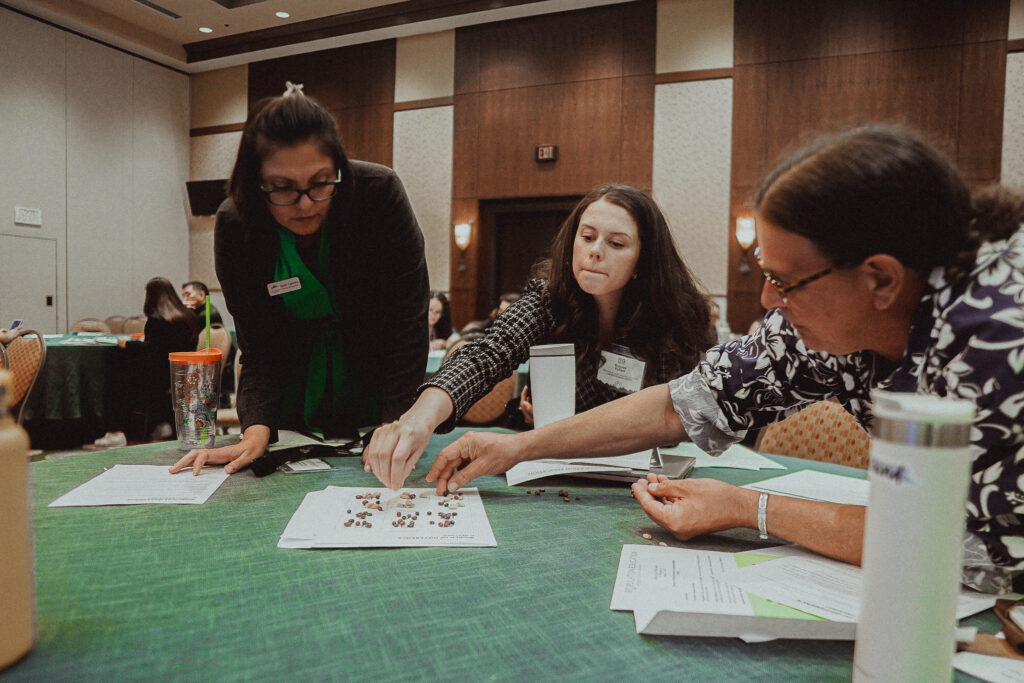
One of the most important lessons I’ve learned is that STEM must feel relevant to students long before they make career decisions. When students engage in hands-on robotics, coding, engineering challenges or applied science programs, they begin to see themselves differently. Curiosity becomes confidence. Abstraction becomes possibility. They stop asking, “What is STEM?” and start asking, “How do I become part of it?”
Through SciTech Institute’s programs, from statewide STEM festivals to teacher professional development to student competitions, we work to create those moments of discovery. These experiences are not extracurricular luxuries; they are foundational exposures that shape career trajectories.
Equally critical is industry engagement. Through the Arizona Technology Council, I work daily with CEOs, founders, university leaders and policymakers who all share the same concern: hiring qualified talent. Many are no longer asking whether their companies should engage in education. They are asking how early to start. Internships, mentorship, equipment donations, curriculum partnerships and real-world project collaboration all help students understand what STEM careers actually look like.
This alignment between education and industry is where Arizona has an opportunity to lead nationally.
Our universities are expanding research capacity. Community colleges are scaling workforce credentialing. K-12 systems are embracing STEM and career-connected learning. And industry is stepping forward as an active partner rather than a passive beneficiary. SciTech Institute plays a key role as a convener and catalyst, bringing these stakeholders together to ensure efforts are coordinated, scalable and impactful.
Importantly, this work must reach every corner of our state. While metropolitan Phoenix and Tucson are major innovation hubs, STEM opportunity cannot and should not be geographically concentrated. Students in rural, tribal and underserved urban communities must see themselves in Arizona’s innovation future as well. While talent is universal, access is not. Expanding that access is both an economic imperative and a moral one.
Looking ahead, the stakes will only grow. Semiconductor fabrication plants, space technologies, quantum computing, autonomous systems and next-generation energy platforms will demand skills that are still emerging today. Preparing students for jobs that do not yet fully exist requires adaptability, problem-solving and lifelong learning—core attributes fostered through strong STEM education.
For me, this work is both professional and deeply personal. Leading the Arizona Technology Council allows me to be an advocate for the companies driving our technology economy. Serving on the SciTech Institute Board and as CEO allows me to help build the talent that will sustain it. Together, these roles provide a full view of Arizona’s innovation lifecycle, from classroom to career, from curiosity to company creation.
When we invest in STEM, we are not simply funding programs. We are building a workforce, strengthening communities and securing our state’s competitive future. STEM education is economic development. It is workforce strategy. It is opportunity creation.
And that is why this mission matters so deeply to me and why I am proud to be part of advancing it every day.