


ACS: Inquiry in Action - Substances Can Mix and React to Form New Substances (Lesson 3.1): What’s the Difference between Baking Soda and Baking Powder?
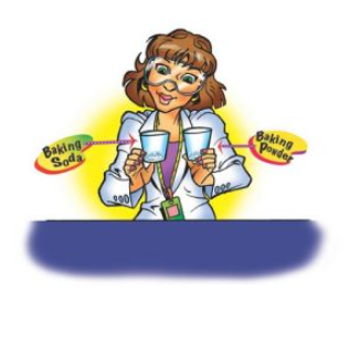
Students design and conduct a test using baking soda and baking powder with vinegar to investigate the question: Will baking soda or baking powder produce more gas when vinegar is added?
Objective
Students will be able to plan and carry out an investigation to compare the amount of gas produced in reactions between baking soda and baking powder when vinegar is added. Students will be able to explain that mixing substances can cause a chemical reaction, which results in the formation of a new substance. Students will also be able to explain that substances react in characteristic ways and that the way a substance reacts can be used to identify the substance.
Key Concepts
- Mixing substances can result in a chemical reaction, which produces new substances.
- Substances have characteristic chemical reactions that can be used to identify them.
- Designing a fair test to study chemical reactions requires keeping everything the same except for the one thing you want to know about.
NGSS Alignment
- NGSS 5-PS1-3: Make observations and measurements to identify materials based on their properties.
- NGSS 5-PS1-1: Develop a model to describe that matter is made of particles too small to be seen.
- NGSS 5-PS1-4: Conduct an investigation to determine whether the mixing of two or more substances results in new substances.
Summary
In this lesson, students will discover that substances have characteristic chemical reactions with other substances and that these reactions can be used to identify a substance.
- Students are shown samples of baking soda and baking powder.
- Students help design an experiment to test whether baking soda and baking powder, similar-looking powders, are made up of the same chemical.
- Students will observe that baking soda produces more bubbles than baking powder when mixed with vinegar, which is evidence that the two substances are chemically different.
- Students conclude that mixing substances can result in a reaction that produces new substances, and that the way different substances react is a characteristic property that can be used to identify a substance.
Evaluation
Download the student activity sheet (PDF) and distribute one per student when specified in the activity. The activity sheet will serve as the Evaluate component of the 5-E lesson plan.
Back to Fifth Grade Lessons
Guided instructions, lesson plans, classroom activities, video demonstrations, and activity books.
Students squeeze a flexible plastic bottle filled with air and another filled with water to investigate the questions: Is an “empty” bottle really empty? and Can you force the molecules of a gas or a liquid to be closer together?
Students compare the dissolving of salt and sugar and then conduct a dissolving test on unknown substances marked A, B, and C to investigate the question: Can substances be identified by how well they dissolve in water?
Students help design a test using baking soda, corn starch, and cream of tartar to investigate the question: Which two of the three ingredients in baking powder react to make it bubble when water is added?
Students combine citric acid with calcium chloride and citric acid with baking soda to investigate the question: What are the similarities and differences between the two reactions? and Do substances react in a characteristic way?
Students add laundry detergent powder (a base) and cream of tartar (an acid) to a red cabbage indicator to investigate the question: What can the color of an indicator tell you about the substances added to it?
Students combine an Ivory Soap solution with an Epsom salt solution to produce a solid “soap scum” to investigate the questions: What happens when you mix soap with hard water? and Is soap scum different from soap?
Students measure the mass of substances before and after melting, dissolving, and a chemical change to investigate the question: Is mass conserved during physical and chemical changes?
Students test citric acid and cream of tartar with baking soda to investigate the question: Which reaction produces more gas? and How much of each reactant should be used to fill a bag with gas to make a cell phone float?
What are you looking for?
Organization
Website URL
Type of Resource
PDF File
Video (Instructional)
Assigned Categories
Resource k12
Students design and conduct a test using baking soda and baking powder with vinegar to investigate the question: Will baking soda or baking powder produce more gas when vinegar is added?
Objective
Students will be able to plan and carry out an investigation to compare the amount of gas produced in reactions between baking soda and baking powder when vinegar is added. Students will be able to explain that mixing substances can cause a chemical reaction, which results in the formation of a new substance. Students will also be able to explain that substances react in characteristic ways and that the way a substance reacts can be used to identify the substance.
Key Concepts
- Mixing substances can result in a chemical reaction, which produces new substances.
- Substances have characteristic chemical reactions that can be used to identify them.
- Designing a fair test to study chemical reactions requires keeping everything the same except for the one thing you want to know about.
NGSS Alignment
- NGSS 5-PS1-3: Make observations and measurements to identify materials based on their properties.
- NGSS 5-PS1-1: Develop a model to describe that matter is made of particles too small to be seen.
- NGSS 5-PS1-4: Conduct an investigation to determine whether the mixing of two or more substances results in new substances.
Summary
In this lesson, students will discover that substances have characteristic chemical reactions with other substances and that these reactions can be used to identify a substance.
- Students are shown samples of baking soda and baking powder.
- Students help design an experiment to test whether baking soda and baking powder, similar-looking powders, are made up of the same chemical.
- Students will observe that baking soda produces more bubbles than baking powder when mixed with vinegar, which is evidence that the two substances are chemically different.
- Students conclude that mixing substances can result in a reaction that produces new substances, and that the way different substances react is a characteristic property that can be used to identify a substance.
Evaluation
Download the student activity sheet (PDF) and distribute one per student when specified in the activity. The activity sheet will serve as the Evaluate component of the 5-E lesson plan.
Back to Fifth Grade Lessons
Guided instructions, lesson plans, classroom activities, video demonstrations, and activity books.
Students squeeze a flexible plastic bottle filled with air and another filled with water to investigate the questions: Is an “empty” bottle really empty? and Can you force the molecules of a gas or a liquid to be closer together?
Students compare the dissolving of salt and sugar and then conduct a dissolving test on unknown substances marked A, B, and C to investigate the question: Can substances be identified by how well they dissolve in water?
Students help design a test using baking soda, corn starch, and cream of tartar to investigate the question: Which two of the three ingredients in baking powder react to make it bubble when water is added?
Students combine citric acid with calcium chloride and citric acid with baking soda to investigate the question: What are the similarities and differences between the two reactions? and Do substances react in a characteristic way?
Students add laundry detergent powder (a base) and cream of tartar (an acid) to a red cabbage indicator to investigate the question: What can the color of an indicator tell you about the substances added to it?
Students combine an Ivory Soap solution with an Epsom salt solution to produce a solid “soap scum” to investigate the questions: What happens when you mix soap with hard water? and Is soap scum different from soap?
Students measure the mass of substances before and after melting, dissolving, and a chemical change to investigate the question: Is mass conserved during physical and chemical changes?
Students test citric acid and cream of tartar with baking soda to investigate the question: Which reaction produces more gas? and How much of each reactant should be used to fill a bag with gas to make a cell phone float?
What are you looking for?
Organization
Website URL
Type of Resource
PDF File
Video (Instructional)
