

ACS: Inquiry in Action - Heating and Cooling (Lesson 5.1): Changes Caused by Heating and Cooling
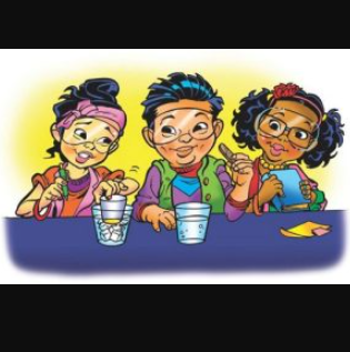
Students warm butter until it melts and then cool it until it turns hard again as they investigate the question: How do substances change when they are warmed and cooled?
Objective
Students will be able to explain that cooling water can change it to ice and that heating ice can change it back to liquid water. Students will be able to explain that this process can also happen to other substances. Students will also be able to explain that heating a substance makes its molecules move faster and cooling a substance makes its molecules move slower. The lesson can also be used to lay a foundation for learning about changes in state and chemical changes which can be further developed in later grades.
Key Concepts
- If water is cooled enough it can change to ice.
- If ice is warmed enough, it can change to liquid water.
- Heating a substance makes the molecules move faster.
- Cooling a substance makes the molecules move slower.
NGSS Alignment
- NGSS 2-PS1-4: Construct an argument with evidence that some changes caused by heating and cooling can be reversed and some cannot.
Summary
- Students see a video of water freezing and then melting.
- Students warm butter until it melts and then cool it until it turns hard again.
- Students view an animation showing that heat causes the molecules in butter to move faster and separate from each other. They also see that cooling butter makes the molecules move more slowly and come back together.
- Students participate in a class discussion about how heating and cooling can cause changes in matter.
Evaluation
Download the Student Activity Sheet (PDF) and distribute one per student when specified in the activity. The activity sheet will serve as the Evaluate component of the 5-E lesson plan.
Back to 2nd Grade lessons
Guided instructions, lesson plans, classroom activities, video demonstrations, and activity books.
Students plan and conduct an absorbency test on paper, plastic, aluminum foil, and felt to investigate the question: Which material absorbs water and why?
Students sort common objects according to characteristics such as shape, flexibility, and the material they are made from to investigate the question: Can you group objects based on their characteristics?
Students conduct a series of tests on different materials to learn about their properties to investigate the question: What are some of the characteristic properties of paper, plastic, and aluminum foil?
Students use what they’ve learned about the properties of paper, plastic, and aluminum foil to investigate the question: Which materials are best for making a boat that can hold the most pennies before sinking?
Students develop a test to compare the dissolving of an M&M and a Skittle in water to investigate the question: Do M&Ms and Skittles dissolve by the same amount?
Students place small common objects made from wax, wood, metal, and rubber in water to investigate the question: Do certain materials tend to float or sink in water?
Students do simple tests to observe the properties of water, mineral oil, and corn syrup on the surface of a zip-closing plastic bag to investigate the question: Can liquids that look similar have different properties?
Students design and conduct an experiment to see if baking powder causes more bubbling in warm or cold water to investigate the question: Does baking powder produce more bubbles when it is heated or cooled?
After an introduction of Snap Cubes as models atoms and molecules, students use Snap Cubes to investigate the question: How can Snap Cubes be used to make models of different molecules?
Student groups use four or five Snap Cubes to make as many different objects as possible to investigate the question: How many different objects can be made by rearranging four cubes?
What are you looking for?
Organization
Website URL
Type of Resource
PDF File
Video (Instructional)
Assigned Categories
Resource k12
Students warm butter until it melts and then cool it until it turns hard again as they investigate the question: How do substances change when they are warmed and cooled?
Objective
Students will be able to explain that cooling water can change it to ice and that heating ice can change it back to liquid water. Students will be able to explain that this process can also happen to other substances. Students will also be able to explain that heating a substance makes its molecules move faster and cooling a substance makes its molecules move slower. The lesson can also be used to lay a foundation for learning about changes in state and chemical changes which can be further developed in later grades.
Key Concepts
- If water is cooled enough it can change to ice.
- If ice is warmed enough, it can change to liquid water.
- Heating a substance makes the molecules move faster.
- Cooling a substance makes the molecules move slower.
NGSS Alignment
- NGSS 2-PS1-4: Construct an argument with evidence that some changes caused by heating and cooling can be reversed and some cannot.
Summary
- Students see a video of water freezing and then melting.
- Students warm butter until it melts and then cool it until it turns hard again.
- Students view an animation showing that heat causes the molecules in butter to move faster and separate from each other. They also see that cooling butter makes the molecules move more slowly and come back together.
- Students participate in a class discussion about how heating and cooling can cause changes in matter.
Evaluation
Download the Student Activity Sheet (PDF) and distribute one per student when specified in the activity. The activity sheet will serve as the Evaluate component of the 5-E lesson plan.
Back to 2nd Grade lessons
Guided instructions, lesson plans, classroom activities, video demonstrations, and activity books.
Students plan and conduct an absorbency test on paper, plastic, aluminum foil, and felt to investigate the question: Which material absorbs water and why?
Students sort common objects according to characteristics such as shape, flexibility, and the material they are made from to investigate the question: Can you group objects based on their characteristics?
Students conduct a series of tests on different materials to learn about their properties to investigate the question: What are some of the characteristic properties of paper, plastic, and aluminum foil?
Students use what they’ve learned about the properties of paper, plastic, and aluminum foil to investigate the question: Which materials are best for making a boat that can hold the most pennies before sinking?
Students develop a test to compare the dissolving of an M&M and a Skittle in water to investigate the question: Do M&Ms and Skittles dissolve by the same amount?
Students place small common objects made from wax, wood, metal, and rubber in water to investigate the question: Do certain materials tend to float or sink in water?
Students do simple tests to observe the properties of water, mineral oil, and corn syrup on the surface of a zip-closing plastic bag to investigate the question: Can liquids that look similar have different properties?
Students design and conduct an experiment to see if baking powder causes more bubbling in warm or cold water to investigate the question: Does baking powder produce more bubbles when it is heated or cooled?
After an introduction of Snap Cubes as models atoms and molecules, students use Snap Cubes to investigate the question: How can Snap Cubes be used to make models of different molecules?
Student groups use four or five Snap Cubes to make as many different objects as possible to investigate the question: How many different objects can be made by rearranging four cubes?
What are you looking for?
Organization
Website URL
Type of Resource
PDF File
Video (Instructional)
