

NRICH: Reflecting Lines

Investigate what happens to the equations of different lines when you reflect them in one of the axes. Try to predict what will happen. Explain your findings.
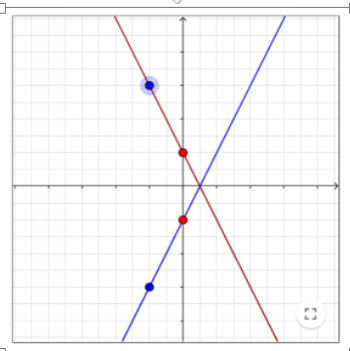
Here are two sets of graphs. Each shows a pair of lines which are reflections of each other, one in the horizontal axis and one in the vertical axis.
Move the red and blue dots on the interactivity below to create some more pairs of reflected lines.
What can you say about the equations of two lines if one is a reflection of the other in the horizontal axis? What about a reflection in the vertical axis?
|
y=3x+14
|
y=4x+3 | y=2x+4 | y=2x+14 |
| y=−14x+3 | y=−4x−2 | y=14x+2 | y=−2x−4 |
| y=−14x+2 | y=3x+4 | y=−3x−14 | y=14x−3 |
| y=−2x+14 | y=−4x+3 | y=4x+2 | y=−3x+4 |
Now imagine that a line is reflected in one of the axes and the image is then reflected in the other.
Can you predict the equation of the resulting line if you know the equation of the original?
Does it make a difference which axis you choose to reflect in first?
Explain your findings.Age 11 to 14
Investigate what happens to the equations of different lines when you reflect them in one of the axes. Try to predict what will happen. Explain your findings.
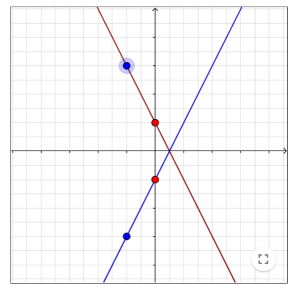
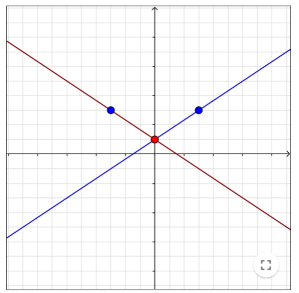
Here are two sets of graphs. Each shows a pair of lines which are reflections of each other, one in the horizontal axis and one in the vertical axis.
Move the red and blue dots on the interactivity below to create some more pairs of reflected lines.
What can you say about the equations of two lines if one is a reflection of the other in the horizontal axis? What about a reflection in the vertical axis?
|
y=3x+14
|
y=4x+3 | y=2x+4 | y=2x+14 |
| y=−14x+3 | y=−4x−2 | y=14x+2 | y=−2x−4 |
| y=−14x+2 | y=3x+4 | y=−3x−14 | y=14x−3 |
| y=−2x+14 | y=−4x+3 | y=4x+2 | y=−3x+4 |
Now imagine that a line is reflected in one of the axes and the image is then reflected in the other.
Can you predict the equation of the resulting line if you know the equation of the original?
Does it make a difference which axis you choose to reflect in first?
Explain your findings.Age 11 to 14