

Click HERE to view the 2024-2025 Community Report
National Aquarium: Hydrothermal Vent Experiment

Hydrothermal vents are only found in the deep sea, but you can replicate one at home with a few materials and a simple experiment!

You can think of hydrothermal vents like deep-sea geysers! They occur when tectonic plates in the Earth’s crust shift, spread apart and create openings in the ocean floor. Hot magma from the Earth’s mantle rises to fill these openings and create new crust, and cold water from the ocean seeps down into the openings. This cold ocean water circulates deep in the crust and becomes heated by hot magma. Pressure begins to build and as the water heats up, it dissolves minerals and becomes nutrient-rich. Warmer water is more buoyant and begins to rise. The hot water eventually exits the ocean floor; when it mixes with cold seawater, the minerals in the water cool and solidify, creating plumes of “smoke” in the deep ocean that can reach temperatures of over 700 degrees Fahrenheit!

With this experiment, you can replicate a hydrothermal vent—without the extreme temperatures!


National Aquarium
Science Topics
Geology, Heat, Oceanography
K-6
Kindergarten, 1st Grade, 2nd Grade, 3rd Grade, 4th Grade, 5th Grade, 6th Grade

What are you looking for?

Organization

National Aquarium

Website URL

Type of Resource

Tutorial

Assigned Categories

Resource k12

National Aquarium: Hydrothermal Vent Experiment

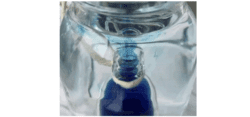
Hydrothermal vents are only found in the deep sea, but you can replicate one at home with a few materials and a simple experiment!

You can think of hydrothermal vents like deep-sea geysers! They occur when tectonic plates in the Earth’s crust shift, spread apart and create openings in the ocean floor. Hot magma from the Earth’s mantle rises to fill these openings and create new crust, and cold water from the ocean seeps down into the openings. This cold ocean water circulates deep in the crust and becomes heated by hot magma. Pressure begins to build and as the water heats up, it dissolves minerals and becomes nutrient-rich. Warmer water is more buoyant and begins to rise. The hot water eventually exits the ocean floor; when it mixes with cold seawater, the minerals in the water cool and solidify, creating plumes of “smoke” in the deep ocean that can reach temperatures of over 700 degrees Fahrenheit!

With this experiment, you can replicate a hydrothermal vent—without the extreme temperatures!

National Aquarium
Science Topics
Geology, Heat, Oceanography
K-6
Kindergarten, 1st Grade, 2nd Grade, 3rd Grade, 4th Grade, 5th Grade, 6th Grade

What are you looking for?

Organization

National Aquarium

Website URL

Type of Resource

Tutorial

Assigned Categories