

Young Scientist Lab: Elephant Toothpaste
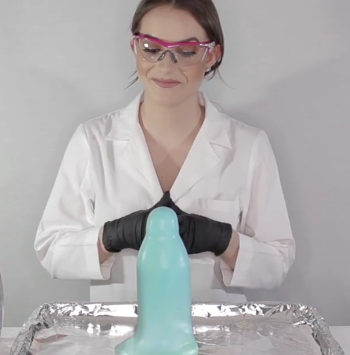
Watch up-close to see how catalysts help ignite chemical reactions. Join Camille Schrier, a scientist who was crowned Miss America 2020, as she shows you how to make a chemical reaction so big it’s fit for elephants!
The elephant toothpaste experiment is so dramatic because the reaction happens quickly. Hydrogen peroxide breaks down naturally over time, especially when exposed to light, but in this reaction the yeast causes that breakdown to happen much quicker. This is because yeast is a catalyst – a substance that can help the reactants react to each other faster, without becoming part of the end products of the reaction. Catalysts were first written about in 1794 by a Scottish chemist named Elizabeth Fulhame. She was writing about chemical reactions used in dyes and paints, and described lots of different ways that metals and other materials interact. Since then, chemists and engineers have discovered lots of other ways to use catalysts, and they help make many materials that we use today. Yeast is a naturally occurring catalyst that is good at breaking down hydrogen peroxide (H2O2) into water (H2O) and oxygen (O2).
In this experiment, we will see how that process looks when it happens quickly.
An Immersive STEM Portal, anchored by the award-winning annual 3M Young Scientist Challenge.
Bring to life core scientific principles with simple, hands-on experiments that utilize common household items.
What are you looking for?
Organization
Website URL
Type of Resource
Video (Instructional)
Assigned Categories
Resource k12
Watch up-close to see how catalysts help ignite chemical reactions. Join Camille Schrier, a scientist who was crowned Miss America 2020, as she shows you how to make a chemical reaction so big it’s fit for elephants!
The elephant toothpaste experiment is so dramatic because the reaction happens quickly. Hydrogen peroxide breaks down naturally over time, especially when exposed to light, but in this reaction the yeast causes that breakdown to happen much quicker. This is because yeast is a catalyst – a substance that can help the reactants react to each other faster, without becoming part of the end products of the reaction. Catalysts were first written about in 1794 by a Scottish chemist named Elizabeth Fulhame. She was writing about chemical reactions used in dyes and paints, and described lots of different ways that metals and other materials interact. Since then, chemists and engineers have discovered lots of other ways to use catalysts, and they help make many materials that we use today. Yeast is a naturally occurring catalyst that is good at breaking down hydrogen peroxide (H2O2) into water (H2O) and oxygen (O2).
In this experiment, we will see how that process looks when it happens quickly.
An Immersive STEM Portal, anchored by the award-winning annual 3M Young Scientist Challenge.
Bring to life core scientific principles with simple, hands-on experiments that utilize common household items.
What are you looking for?
Organization
Website URL
Type of Resource
Video (Instructional)
