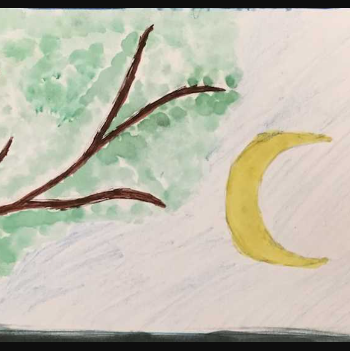

California Academy of Sciences: A Science Notebook Story - Investigating Moon Phases
Erica spent a few months exploring phases of the moon with her fifth grade students.
She adapted lessons from Lawrence Hall of Science’s GEMS in order to give her students lots of opportunities to answer the Essential Question: Why does the moon look different on different days? Erica’s students used their science notebooks to record observations of the moon, formulate initial ideas about moon phases, and revise their thinking after developing a kinesthetic model.
Read on to see how several notebook strategies worked together to help students build their science ideas. To view examples of student work and to download the complete unit plan, click the links below.
The mission of the California Academy of Sciences is to explore, explain, and sustain life.
Here you’ll find short, lively activities to focus your class trip, or full-period lessons to integrate into your yearly curriculum.
What are you looking for?
Organization
Website URL
Type of Resource
Assigned Categories
Resource k12
Erica spent a few months exploring phases of the moon with her fifth grade students.
She adapted lessons from Lawrence Hall of Science’s GEMS in order to give her students lots of opportunities to answer the Essential Question: Why does the moon look different on different days? Erica’s students used their science notebooks to record observations of the moon, formulate initial ideas about moon phases, and revise their thinking after developing a kinesthetic model.
Read on to see how several notebook strategies worked together to help students build their science ideas. To view examples of student work and to download the complete unit plan, click the links below.
The mission of the California Academy of Sciences is to explore, explain, and sustain life.
Here you’ll find short, lively activities to focus your class trip, or full-period lessons to integrate into your yearly curriculum.