
NRICH: Days and Dates
Investigate how you can work out what day of the week your birthday will be on next year, and the year after…
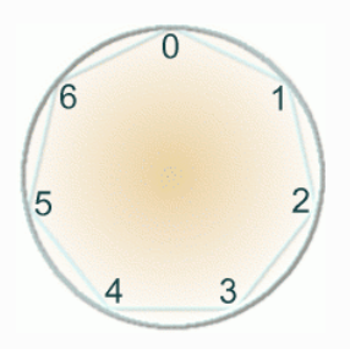
If today is Monday we know that in 702 days’ time (that is in 100 weeks and 2 days’ time) it will be Wednesday. This is an example of “clock” or “modular” arithmetic.
What day will it be in 15 days? 26 days? 234 days?
In 2, 9, 16 and 23 days from now, it will be a Wednesday.
What other numbers of days from now will be Wednesdays?
Can you generalise what you have noticed?
Choose a pair of numbers and find the remainders when you divide by 7.
Then find the remainder when you divide the total by 7. For example:
| 15÷7=2 remainder 1 | 15+26=41 | |
| 26÷7=3 remainder 5 | 41÷7=5 remainder 6 |
Choose some more pairs of numbers.
Is there a relationship between the remainders when you divide each by 7, and the remainder when you divide their total by 7?
Now find the remainder when you divide the product of 15 and 26 by 7. What happens?
Choose some more pairs of numbers.
Is there a relationship between the remainders when you divide each by 7, and the remainder when you divide their product by 7?
What about when you divide by numbers other than 7?
Can you explain what you’ve noticed?
Age 11 to 14
NRICH provides thousands of free online mathematics resources for ages 3 to 18, covering all stages of early years, primary and secondary school education – completely free and available to all.
Do you enjoy thought-provoking questions? If so, this is the place for you.
What are you looking for?
Organization
Website URL
Type of Resource
Assigned Categories
Resource k12
Investigate how you can work out what day of the week your birthday will be on next year, and the year after…
If today is Monday we know that in 702 days’ time (that is in 100 weeks and 2 days’ time) it will be Wednesday. This is an example of “clock” or “modular” arithmetic.
What day will it be in 15 days? 26 days? 234 days?
In 2, 9, 16 and 23 days from now, it will be a Wednesday.
What other numbers of days from now will be Wednesdays?
Can you generalise what you have noticed?
Choose a pair of numbers and find the remainders when you divide by 7.
Then find the remainder when you divide the total by 7. For example:
| 15÷7=2 remainder 1 | 15+26=41 | |
| 26÷7=3 remainder 5 | 41÷7=5 remainder 6 |
Choose some more pairs of numbers.
Is there a relationship between the remainders when you divide each by 7, and the remainder when you divide their total by 7?
Now find the remainder when you divide the product of 15 and 26 by 7. What happens?
Choose some more pairs of numbers.
Is there a relationship between the remainders when you divide each by 7, and the remainder when you divide their product by 7?
What about when you divide by numbers other than 7?
Can you explain what you’ve noticed?
Age 11 to 14
NRICH provides thousands of free online mathematics resources for ages 3 to 18, covering all stages of early years, primary and secondary school education – completely free and available to all.
Do you enjoy thought-provoking questions? If so, this is the place for you.