


National Aquarium: Peacock Mantis Shrimp (Odontodactylus scyllarus)

National Aquarium: Peacock Mantis Shrimp (Odontodactylus scyllarus)

Learn more about the peacock mantis shrimp!

Did you know that, because the mantis shrimp’s club can withstand incredible force, researchers believe that understanding its structure can help design body armor, protective sports gear and aerospace equipment?

The colorful peacock mantis shrimp is the very definition of “small but mighty.” They are typically only 2 to 7 inches long, but in a matter of milliseconds, a mantis shrimp can unfurl its appendages—which fold underneath its body—to deliver a devastating blow that pulverizes prey.

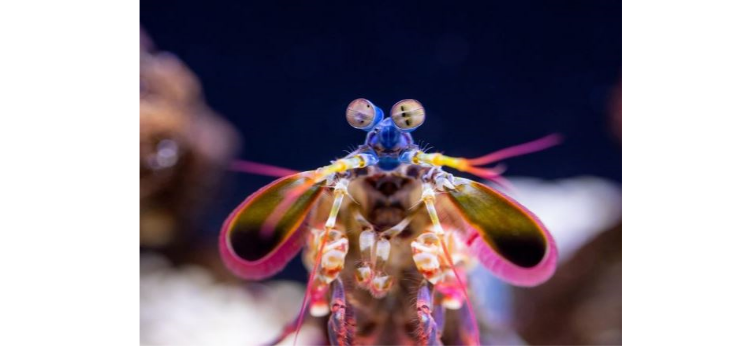
They also have complex eyes that move independently from each other and allow them to see the world very differently than humans do. Mantis shrimps’ eyes have at least 12 types of photoreceptors, which increases the speed at which they can identify colors. The shrimp’s own hard-shelled body is bursting with color—hues of bright red, green, orange and blue, and its forearms are covered in spots.


National Aquarium
Science Topics
Zoology
Animals
Crabs, Lobsters, Shrimp, & Krill
K-6
Kindergarten, 1st Grade, 2nd Grade, 3rd Grade, 4th Grade, 5th Grade, 6th Grade

What are you looking for?

Organization

National Aquarium

Website URL

Type of Resource

Article

Assigned Categories

Resource k12

National Aquarium: Peacock Mantis Shrimp (Odontodactylus scyllarus)

Learn more about the peacock mantis shrimp!

Did you know that, because the mantis shrimp’s club can withstand incredible force, researchers believe that understanding its structure can help design body armor, protective sports gear and aerospace equipment?

The colorful peacock mantis shrimp is the very definition of “small but mighty.” They are typically only 2 to 7 inches long, but in a matter of milliseconds, a mantis shrimp can unfurl its appendages—which fold underneath its body—to deliver a devastating blow that pulverizes prey.

They also have complex eyes that move independently from each other and allow them to see the world very differently than humans do. Mantis shrimps’ eyes have at least 12 types of photoreceptors, which increases the speed at which they can identify colors. The shrimp’s own hard-shelled body is bursting with color—hues of bright red, green, orange and blue, and its forearms are covered in spots.

National Aquarium
Science Topics
Zoology
Animals
Crabs, Lobsters, Shrimp, & Krill
K-6
Kindergarten, 1st Grade, 2nd Grade, 3rd Grade, 4th Grade, 5th Grade, 6th Grade

What are you looking for?

Organization

National Aquarium

Website URL

Type of Resource

Article

Assigned Categories