


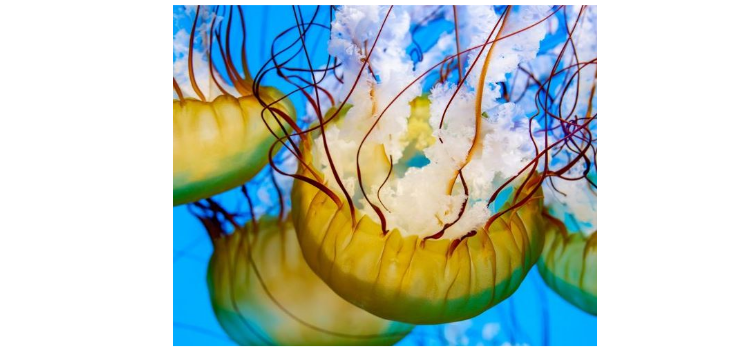
National Aquarium: Pacific Sea Nettle (Chrysaora fuscescens)
Learn more about the Pacific sea nettle!
Did you know that this jelly uses light-sensing organs (called ocelli) to migrate daily from dark, deep water to sunlit surface water?
The Pacific sea nettle’s large bell is yellow to reddish-brown, and its long, ruffled tentacles can be yellow to dark maroon. These tentacles are covered with stinging cells, which are lethal to prey. The sea nettle’s stings aren’t dangerous to humans, although they are painful.
What are you looking for?
Organization
Website URL
Type of Resource
Assigned Categories
Resource k12
Learn more about the Pacific sea nettle!
Did you know that this jelly uses light-sensing organs (called ocelli) to migrate daily from dark, deep water to sunlit surface water?
The Pacific sea nettle’s large bell is yellow to reddish-brown, and its long, ruffled tentacles can be yellow to dark maroon. These tentacles are covered with stinging cells, which are lethal to prey. The sea nettle’s stings aren’t dangerous to humans, although they are painful.

