

National Aquarium: Johnston’s Crocodile (Crocodylus johnstoni)

National Aquarium: Johnston’s Crocodile (Crocodylus johnstoni)

Did you know that these crocodiles will open their mouths during basking to prevent overheating?

Johnston’s crocodiles—which also known as Australian freshwater crocodiles or freshies—have strong legs, clawed webbed feet and powerful tails. Equally fast on land and water, these crocodiles can move at speeds of up to 18 miles per hour.

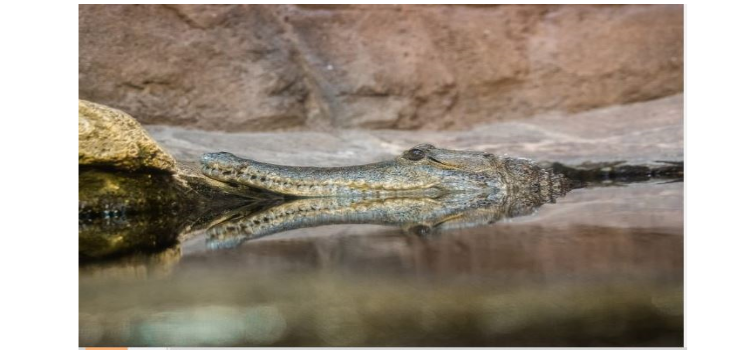
This crocodile is gray or olive-brown with a lighter underside and darker mottling or bands on the upper body, tail and sometimes snout. It has a smooth, narrow, tapering snout and a mouth lined with 68 to 72 sharp teeth. The fourth tooth on either side of the bottom jaw protrudes outward and can be seen when the animal’s mouth is closed.

In the dry season, females lay about 20 eggs in sandy hollows, which they protect until they hatch. Hatchlings call from within the egg before hatching. The mother crocodile responds by excavating the nest, picking up the eggs in her mouth and carrying them to the water to hatch.

Learn more about the Johnston’s crocodile!


National Aquarium
Science Topics
Zoology
Animals
Alligators & Crocodiles
K-6
Kindergarten, 1st Grade, 2nd Grade, 3rd Grade, 4th Grade, 5th Grade, 6th Grade

What are you looking for?

Organization

National Aquarium

Website URL

Type of Resource

Article

Assigned Categories

Resource k12

National Aquarium: Johnston’s Crocodile (Crocodylus johnstoni)

Did you know that these crocodiles will open their mouths during basking to prevent overheating?

Johnston’s crocodiles—which also known as Australian freshwater crocodiles or freshies—have strong legs, clawed webbed feet and powerful tails. Equally fast on land and water, these crocodiles can move at speeds of up to 18 miles per hour.

This crocodile is gray or olive-brown with a lighter underside and darker mottling or bands on the upper body, tail and sometimes snout. It has a smooth, narrow, tapering snout and a mouth lined with 68 to 72 sharp teeth. The fourth tooth on either side of the bottom jaw protrudes outward and can be seen when the animal’s mouth is closed.

In the dry season, females lay about 20 eggs in sandy hollows, which they protect until they hatch. Hatchlings call from within the egg before hatching. The mother crocodile responds by excavating the nest, picking up the eggs in her mouth and carrying them to the water to hatch.

Learn more about the Johnston’s crocodile!

National Aquarium
Science Topics
Zoology
Animals
Alligators & Crocodiles
K-6
Kindergarten, 1st Grade, 2nd Grade, 3rd Grade, 4th Grade, 5th Grade, 6th Grade

What are you looking for?

Organization

National Aquarium

Website URL

Type of Resource

Article

Assigned Categories