


National Aquarium: Anemones (Actiniaria)
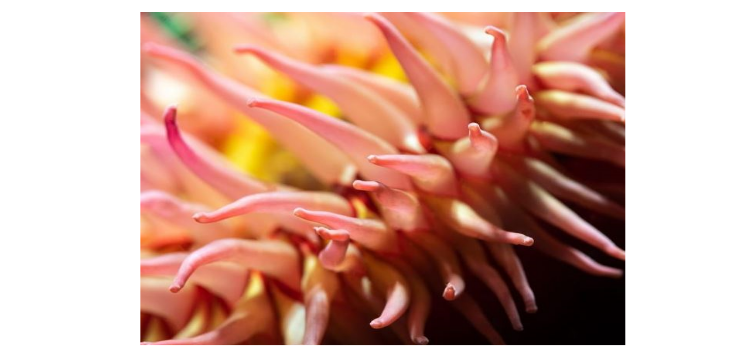
Did you know that anemones can have anywhere from a dozen to a few hundred tentacles?
Sea anemones are named after and resemble flowers, but they’re actually invertebrates related to corals and jellies. Their bodies consist of a soft, cylindrical stalk topped by an oral disc surrounded with venomous tentacles.
At their base, they sport a single adhesive foot, called a basal disc, which they use to attach to underwater surfaces like rocks or shells. Anemones can have anywhere from a dozen to a few hundred tentacles. These cnidarians come in a variety of colors, decorating a tide pool or reef like a garden of wildflowers.
Anemones are known to form symbiotic relationships with other animals; their most well-known alliance is with clownfish. Because of a protective mucous coating, clownfish are immune to an anemone’s stinging cells. They make their homes within the anemone’s tentacles, protected from predators; in return, the anemone eats the clownfish’s leftover meals.
At the National Aquarium, you’ll find 16 different species of sea anemones.
Read on to learn more about anemones!
What are you looking for?
Organization
Website URL
Type of Resource
Assigned Categories
Resource k12
Did you know that anemones can have anywhere from a dozen to a few hundred tentacles?
Sea anemones are named after and resemble flowers, but they’re actually invertebrates related to corals and jellies. Their bodies consist of a soft, cylindrical stalk topped by an oral disc surrounded with venomous tentacles.
At their base, they sport a single adhesive foot, called a basal disc, which they use to attach to underwater surfaces like rocks or shells. Anemones can have anywhere from a dozen to a few hundred tentacles. These cnidarians come in a variety of colors, decorating a tide pool or reef like a garden of wildflowers.
Anemones are known to form symbiotic relationships with other animals; their most well-known alliance is with clownfish. Because of a protective mucous coating, clownfish are immune to an anemone’s stinging cells. They make their homes within the anemone’s tentacles, protected from predators; in return, the anemone eats the clownfish’s leftover meals.
At the National Aquarium, you’ll find 16 different species of sea anemones.
Read on to learn more about anemones!

