
By Dr. Jeremy Babendure, Executive Director, SciTech Institute
There is a question at the center of much of the work we do at SciTech Institute:
How do we better connect learning, skills, and career opportunities across systems?
It is a question that has taken on even greater importance as we think about the future of the STEMM workforce. Across the country, there are people developing valuable STEMM skills in classrooms, colleges, training programs, workplaces, and communities. There are also employers looking for those skills.
Yet those pieces do not always connect as clearly as they could.
Sometimes the challenge is opportunity. Sometimes it is information. And sometimes, it is language.
Different systems often describe the same skills, experiences, and pathways in very different ways. When education, workforce, and industry use different frameworks to describe what people know and can do, it becomes harder to see the connections between learning and opportunity.
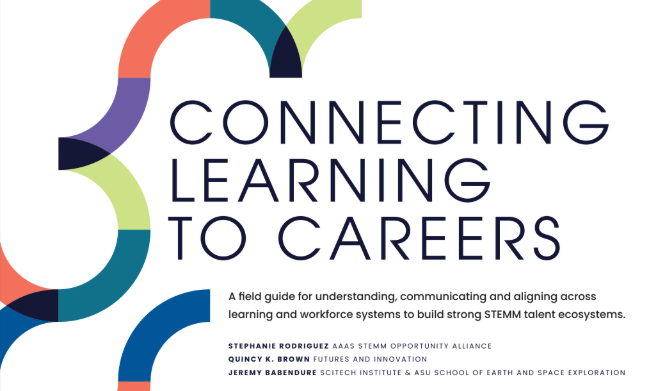
That is one of the challenges we have been working to address in Arizona, and it is why I was especially grateful to contribute to three publications exploring this work: the STEMM Opportunity Alliance’s Connecting Learning to Careers Field Guide, its accompanying Arizona case study, “Speaking Across Languages,” and a recent article in Science titled “Connect education and workforce systems to discover America’s ‘hidden’ STEMM workers.”
A shared language for skills
At SciTech Institute, our Skills Map Framework is one part of that effort.
The idea is straightforward: skills are a common thread running through education and careers, but the systems around learners do not always have a common way to describe them.
A student might develop collaboration, problem-solving, communication, digital literacy, or technical skills through a class, project, internship, or extracurricular experience. An educator may describe those experiences one way. A workforce organization may use another framework. An employer may describe the same capabilities through a job description. 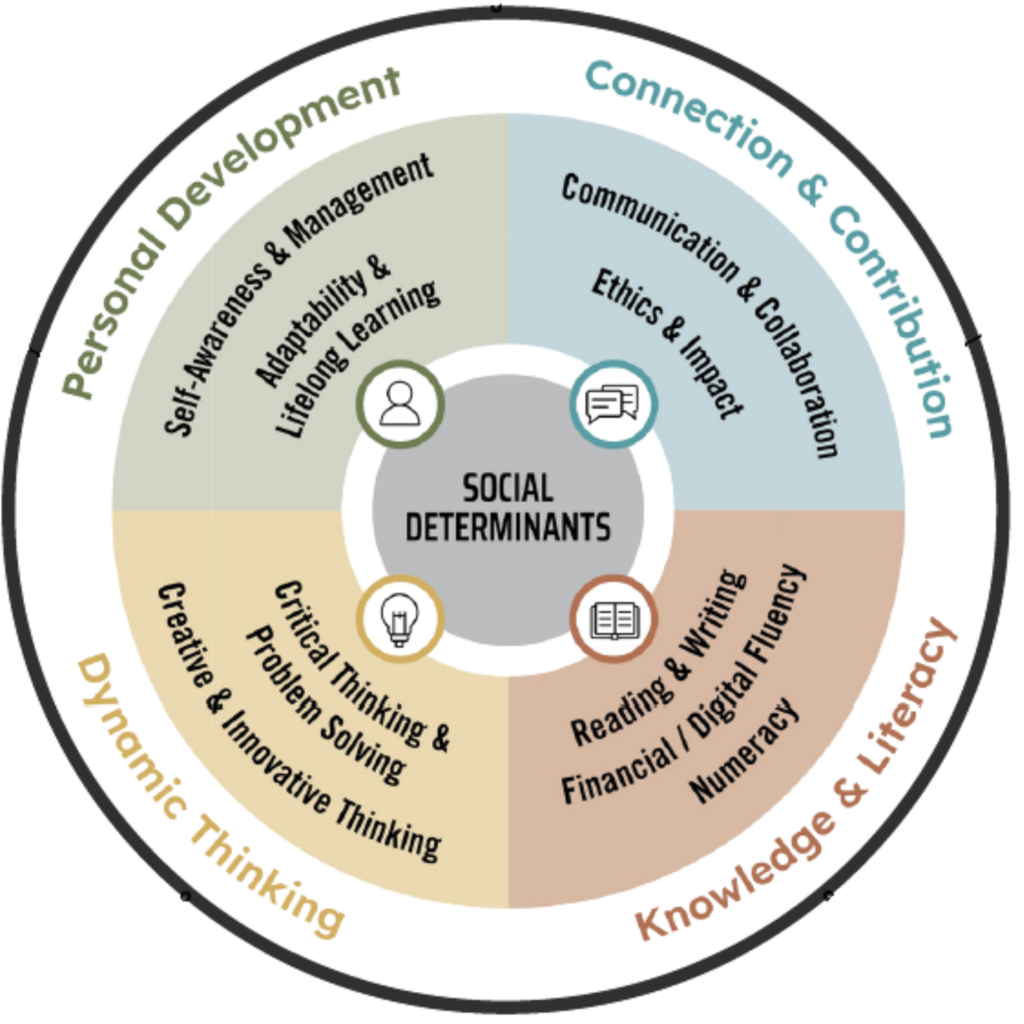
Creating connections among those different ways of talking about skills can make pathways easier to see.
That is the focus of the Arizona case study, “Speaking Across Languages,” included in the STEMM Opportunity Alliance Field Guide. The case study examines SciTech’s work to create greater alignment across education, workforce, and industry, using skills as one of the bridges between these systems.
The goal is not to make every organization use exactly the same terminology. It is to make it easier for people and organizations to understand one another.
Looking for the STEMM workers we may be missing
The same challenge appears in the Science article, but from a broader workforce perspective.
The article asks us to consider the people who already possess STEMM-related knowledge and skills but may not be visible through traditional ways of defining or identifying the STEMM workforce.
That matters because our understanding of the STEMM workforce is shaped by the categories and systems we use to describe it.
If our education and workforce systems are not speaking the same language, we may have difficulty seeing the full picture of who has STEMM skills, how those skills were developed, and where they can contribute.
Better connections between systems can help reveal those pathways.
For me, this is an important shift in how we think about workforce development. We should continue creating new opportunities for people to develop STEMM skills, but we also need to get better at recognizing the skills people are already developing and connecting them to meaningful opportunities.
Arizona has something to contribute
One reason I am particularly proud of the Arizona case study is that it shows what this work can look like in practice.
Arizona has a strong network of educators, employers, workforce organizations, higher education institutions, nonprofits, and other partners working across the STEMM ecosystem. SciTech Institute’s role has often been to help connect those pieces.
Our Skills Map work builds on that role.
We are working to map skills and career pathways across sectors, while giving partners a framework they can use to understand how those pieces relate. The work currently includes eight skill areas and connections to sectors such as aerospace, advanced manufacturing, healthcare, sustainable energy, mining, and technology.
What it means is, we are creating connections between systems that already exist.
From learning to opportunity
I believe one of the most important things we can do for learners is make the relationship between what they are learning and where it can lead more visible.
A student should be able to see that the skills they are developing today have value beyond a particular class or assignment.
An educator should have better information about the skills employers and industries are seeking.
An employer should have clearer ways to communicate the skills behind its workforce needs.
And workforce organizations should be able to help connect people to opportunities without requiring them to navigate a maze of disconnected terminology and systems.
These connections require organizations to listen to one another, share information, develop common frameworks, and spend time understanding how their work fits into the larger ecosystem.
That is the kind of bridging-the-gap work that has always been at the heart of SciTech Institute.
A larger conversation
Being able to contribute to the STEMM Opportunity Alliance Field Guide, the Arizona case study, and the Science article has given me an opportunity to reflect on how this work fits into a much larger conversation.
The Field Guide, Connecting Learning to Careers, brings together perspectives and practices from across the STEMM ecosystem to examine how we can build connections between learning and career pathways.
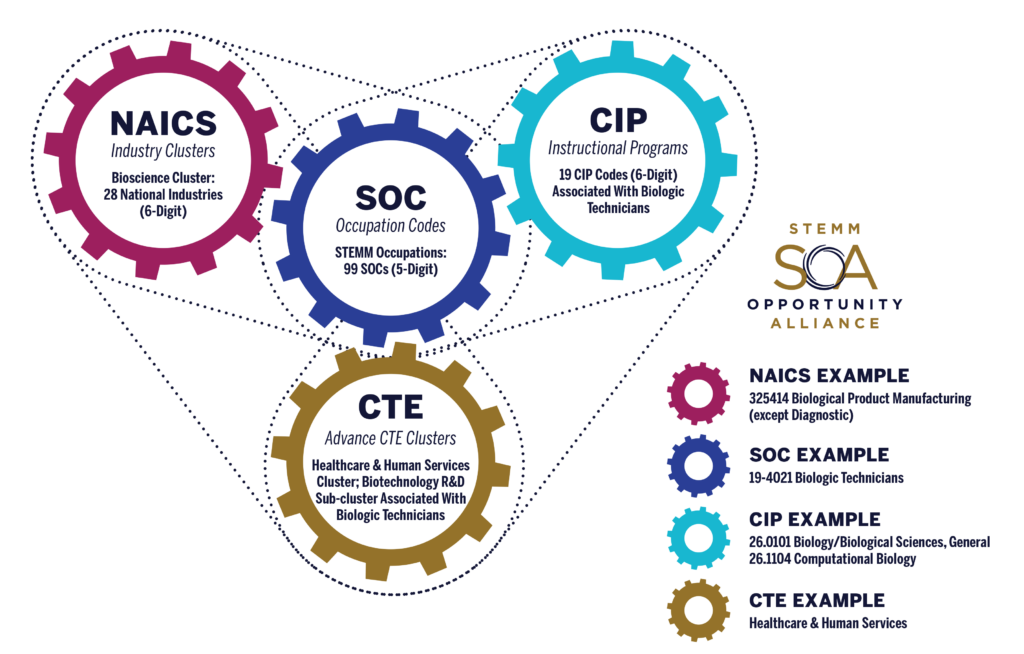
The Arizona case study makes that conversation tangible by looking at how shared language around skills can help connect education, workforce, and industry.
And the Science article broadens the lens further, asking how stronger connections between education and workforce systems can help us discover and better understand the STEMM talent that already exists across the country.
For me, these are not separate conversations.
They are connected.
If we want to strengthen the STEMM workforce, we need to understand how people develop skills. We need to recognize those skills. We need to make pathways visible. And we need systems that can communicate with one another well enough to connect people with opportunity.
That work requires collaboration, and it requires us to keep learning from one another.
I am grateful to the colleagues and partners who have helped move this work forward, particularly my co-collaborators on these publications: Stephanie Rodriguez with the STEMM Opportunity Alliance and Quincy K. Brown with Futures and Innovation, as well as everyone contributing to the larger effort to connect learning and opportunity.
There is still a great deal of work ahead.
But if we can get better at speaking across systems, we can also get better at seeing the people, skills, and opportunities that are already there.
That is where stronger STEMM pathways begin.
Explore the Work
STEMM Opportunity Alliance: Connecting Learning to Careers Field Guide
https://stemmopportunity.org/fieldguide
Arizona Case Study: “Speaking Across Languages”
https://bit.ly/4hG4OYphttps://lnkd.in/gdtRTiT3
Science Magazine: “Connect education and workforce systems to discover America’s ‘hidden’ STEMM workers”
https://www.sciencemagazinedigital.org/sciencemagazine/library/item/24_september_2026/4363568/