


Environmental Protection Agency: Light Duty Vehicle Emissions
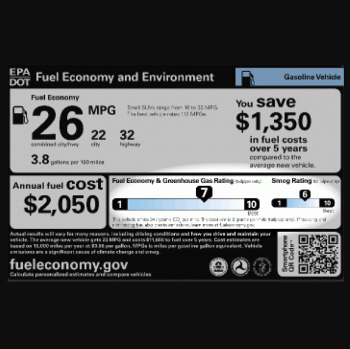
Cars, SUVs, and light duty trucks that are fueled by gasoline, diesel, and E85 emit both greenhouse gases and smog-forming pollutants from their tailpipes.
- Greenhouse gases (GHGs) are emitted from the tailpipes of cars and trucks that combust fuel.
- Once GHGs are released, they can stay in the atmosphere for 100 years or more.
- GHGs act like a blanket around Earth, trapping energy in the atmosphere and causing it to warm. This can change Earth’s climate, raise sea levels, and result in dangerous effects to human health and welfare, and to ecosystems.
- Cars and trucks that combust fuel also emit smog forming emissions, such as nitrogen oxide, non-methane organic gases, carbon monoxide, particulate matter, and formaldehyde.
- These emissions are usually trapped close to the ground and can form a brownish haze that pollutes our air, particularly over cities in the summertime.
- Smog can make it difficult for some people to breathe, triggering lung diseases such as asthma, emphysema, and chronic bronchitis, which may lead to premature death.
Learn how air pollution can harm your health and the environment, and what EPA is doing to protect the air we breathe.
The Clean Air Act requires EPA to set National Ambient Air Quality Standards (NAAQS) for six common air pollutants (also known as “criteria air pollutants”).
Find information about wise driving, choosing fuel efficient vehicles, and other tips for decreasing your carbon footprint.
What you drive, how you drive, and what fuel you use can impact both the environment and your pocketbook.
What are you looking for?
Organization
Website URL
Type of Resource
Assigned Categories
Resource k12
Cars, SUVs, and light duty trucks that are fueled by gasoline, diesel, and E85 emit both greenhouse gases and smog-forming pollutants from their tailpipes.
- Greenhouse gases (GHGs) are emitted from the tailpipes of cars and trucks that combust fuel.
- Once GHGs are released, they can stay in the atmosphere for 100 years or more.
- GHGs act like a blanket around Earth, trapping energy in the atmosphere and causing it to warm. This can change Earth’s climate, raise sea levels, and result in dangerous effects to human health and welfare, and to ecosystems.
- Cars and trucks that combust fuel also emit smog forming emissions, such as nitrogen oxide, non-methane organic gases, carbon monoxide, particulate matter, and formaldehyde.
- These emissions are usually trapped close to the ground and can form a brownish haze that pollutes our air, particularly over cities in the summertime.
- Smog can make it difficult for some people to breathe, triggering lung diseases such as asthma, emphysema, and chronic bronchitis, which may lead to premature death.
Learn how air pollution can harm your health and the environment, and what EPA is doing to protect the air we breathe.
The Clean Air Act requires EPA to set National Ambient Air Quality Standards (NAAQS) for six common air pollutants (also known as “criteria air pollutants”).
Find information about wise driving, choosing fuel efficient vehicles, and other tips for decreasing your carbon footprint.
What you drive, how you drive, and what fuel you use can impact both the environment and your pocketbook.
